

Un Enfoque Especializado para la EAP
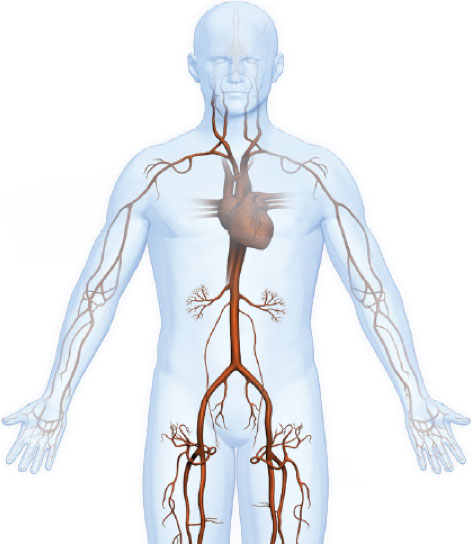
El Sistema de Aterectomía Orbital Periférica Stealth 360™ (OAS) ofrece herramientas para enfrentar diversos escenarios de calcificación, ventajas de perfil bajo y múltiples soluciones de acceso.
Explore el Dispositivo Stealth 360™
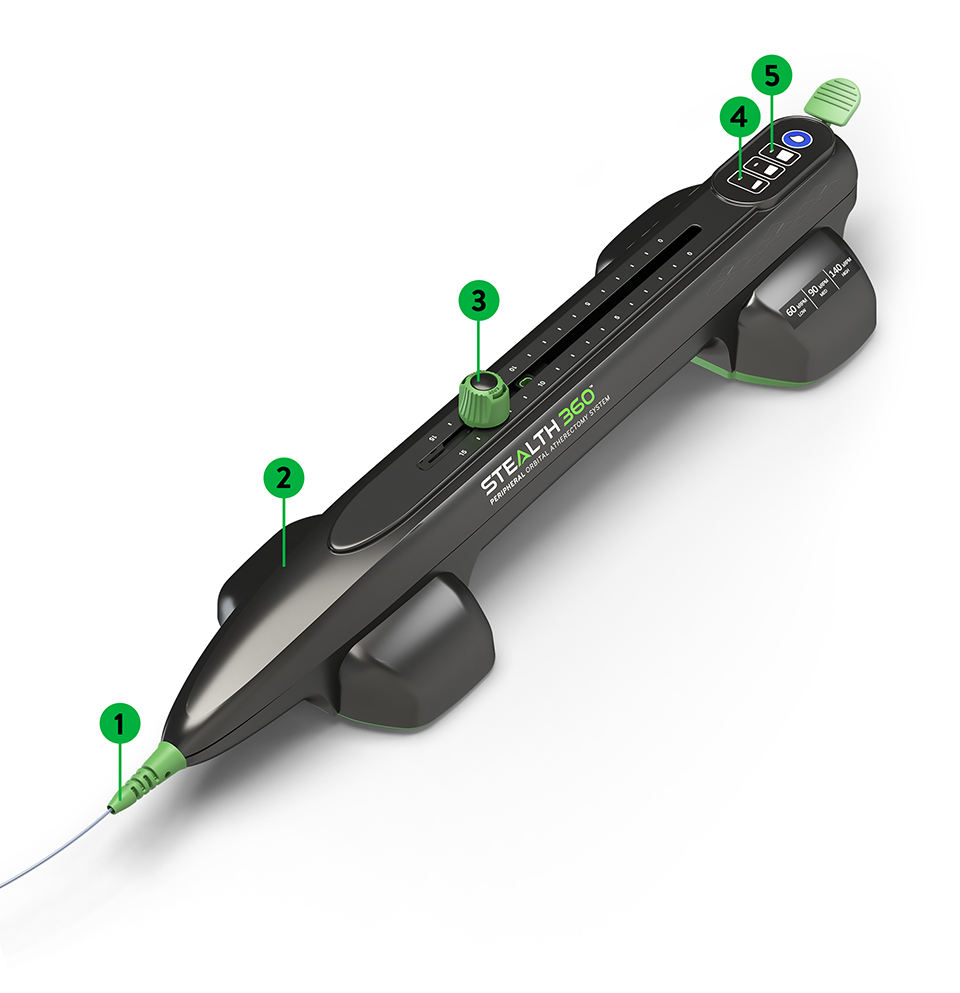
 Trate a más pacientes con tamaños de vaina de 4-6 Fr
 Cable eléctrico
 Botón de inicio con un toque, que facilita la activación del dispositivo
 El modo GlideAssist™ se destaca en la micro corona de 1,25 y permite que la corona gire a baja velocidad (5k RPM), reduciendo la fricción para facilitar el seguimiento y la extracción del dispositivo
 Controles de tres velocidades convenientes permiten ajustes rápidos de velocidad dentro del campo estéril
Opciones de Coronas Stealth 360™
Coronas recubiertas de diamante montadas excéntricamente con capacidades bidireccionales tratan una amplia gama de vasos, permitiendo el tratamiento de múltiples lesiones y tamaños de vasos con un solo dispositivo
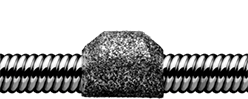
Micro Crown
- Diseñada con flexibilidad para vasos tortuosos y curvas cerradas por debajo de la rodilla¹
- El modo GlideAssist™ para la Micro corona de 1,25 permite que la corona gire a baja velocidad (5k RPM) para facilitar el seguimiento y la extracción del dispositivo sobre el hilo guía¹

Solid Crown
- Diseñada para lesiones calcificadas de moderadas a severas¹
- Proporciona un lijado eficiente en calcificaciones²
- La superficie recubierta de diamante permite tiempos de ejecución cortos¹
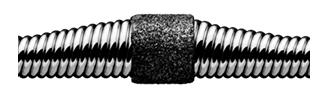
Classic Crown
- La más flexible de nuestras configuraciones de corona¹
- Diseñada para curvas de vasos, lesiones ostiales y procedimientos distales por debajo de la rodilla¹
Bomba OAS para Mecanismo de Bombeo de AterectomíaLa bomba OAS se monta directamente en un soporte de suero y proporciona energía y el mecanismo de bombeo para el Sistema Stealth 360™. |
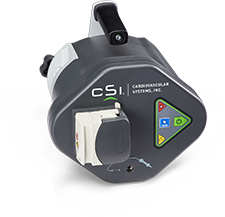 |
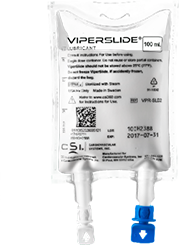
Lubricante para Dispositivo de Aterectomía ViperSlide™
ViperSlide™ es un lubricante exclusivo para uso con los Sistemas de Aterectomía Orbital de Abbott. ViperSlide™ aumenta la lubricación, reduciendo así la fricción entre el eje del dispositivo de aterectomía y la guía ViperWire™ Advance. |
 |
Hilos-Guías Periféricas ViperWire Advance™ y ViperWire Advance™ con Punta Flexible
Los hilos- guías periféricas ViperWire Advance™ y ViperWire Advance™ con punta flexible están diseñadas específicamente para los Sistemas de Aterectomía Orbital Periférica Stealth 360™ para facilitar la colocación adecuada del dispositivo dentro de la arteria periférica, permitiendo el avance orbital durante el tratamiento de la EAP. |
 |
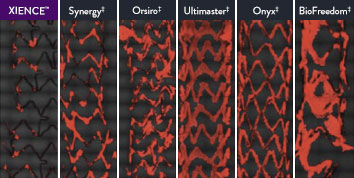
The XIENCE™ Stent is also recognized as being significantly more anti-thrombotic than other DES on the market. As shown in the study findings, XIENCE™ Stent reveals significantly less (p < 0.01) platelet adhesion—shown in red in the confocal microscopy images—than other DES, and platelet adhesion is an important factor in stent thrombosis.*8 These findings suggest that this stent choice “may be ideally suited for very short-term DAPT.”8
*Ex Vivo Swine Shunt Model.

Diamondback 360™ OAS Gives You the Versatility to Treat Challenging Cases
Treat even the most severely calcified lesions, with under 2-minute setup7,8 and predictable procedure times.2
Facilitates antegrade and retrograde treatment of:
- Long, Diffuse Lesions
Successfully treated lesions up to 60 mm in length in real-world study.9 - Heavily Stenosed Lesions
Crossed >99% of lesions with <2% pre-dilatation in the ORBIT II study.1,10 - Nodular Lesions
Effectively treats nodular calcification.5,6 - Ostial Lesions
Safely treats ostial lesions.11-13
Low Profile
6F compatible for femoral or radial access.14
Multiple Vessel Sizes
A single 1.25 mm crown treats vessels 2.5 mm to 4.0mm14
Diamondback 360™ OAS Has Been Proven Effective and Safe in the Treatment of Severely Calcified Lesions.
Extensively studied, and with over 100,000 patients treated,15 orbital atherectomy has been demonstrated to perform effectively and safely in the treatment of severely calcified lesions.
|
|
Proven Safety |
Procedural Success |
Low Q-Wave MI Rate |
>2,200 |
<1% |
97.7% |
0.9% |
|
Patients Across 11 |
Component Angiographic |
Crossing and Stent |
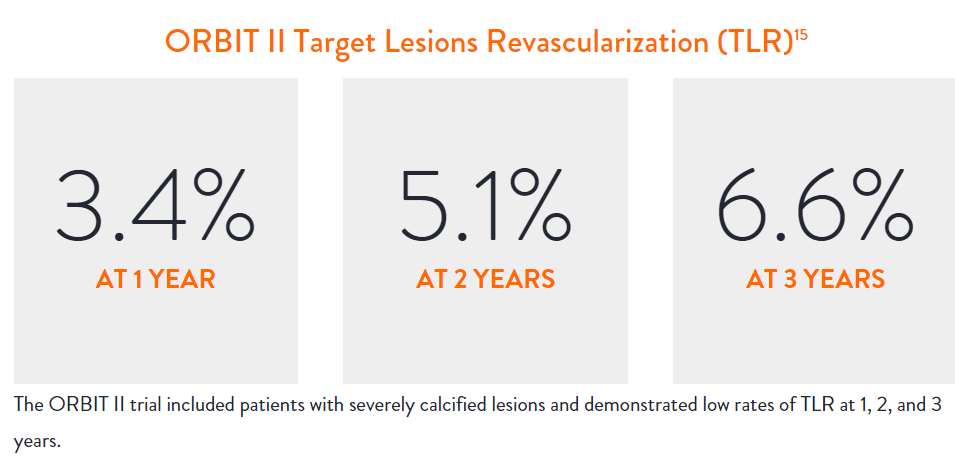
In the ORBIT II |
Sustained Clinical Performance
Data are for ORBIT II TLR in the OA+DES patient cohort.

STOPDAPT 2 Trial Design and Randomization10

Short 1-Month DAPT
- 0 to 1-month: Aspirin + P2Y12
- After 1-month: Clopidogrel monotherapy

12-Month DAPT
- 0 to 1-month: Aspirin + P2Y12
- 1 to 12-month: Aspirin + Clopidogrel
- 12 to 60-month: Aspirin monotherapy

- Successful PCI using CoCr everolimus-eluting stent: XIENCE™
- Eligible for DAPT (aspirin/P2Y12 receptor blocker) for 1 year

- Patients who need oral anticoagulants
- History of intracranial bleeding
- Major in-hospital complications (MI/stroke/major bleeding)
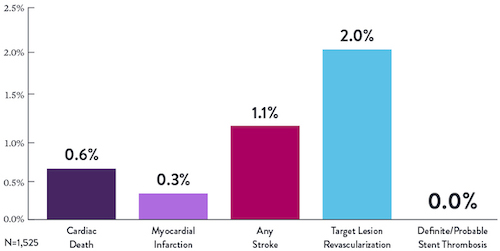
STOPDAPT Study: XIENCE™ Stent with 3-Month DAPT Is Feasible9
STOPDAPT9 was the first prospective trial to study DAPT cessation at 3 months after implantation. Among other 1-year outcomes, the XIENCE™ Stent rate of stent thrombosis was 0.0%.
STOPDAPT Study Demonstrates Feasibility of XIENCE™ Stent with 3-Month DAPT9
STOPDAPT-3 Trial Design and Randomization11
- PCI with planned exclusive use of CoCr-EES (XIENCE)
- ACS presentation or ARC-HBR
- Eligible for DAPT (Aspirin/P2Y12inhibitor) for 1 month
Study design and Randomization
Group 1:
0 to 1-month: Aspirin + P2Y12 (Prasugrel)
After 1-month: Clopidogrel monotherapy
Group 2:
0 to 1-month: P2Y12 (Prasugrel)
After 1-month: Clopidogrel monotherapy
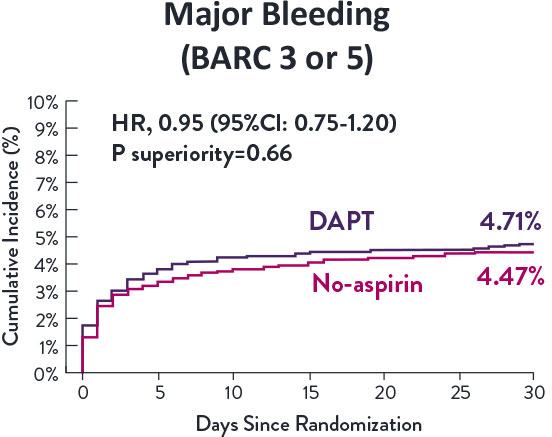
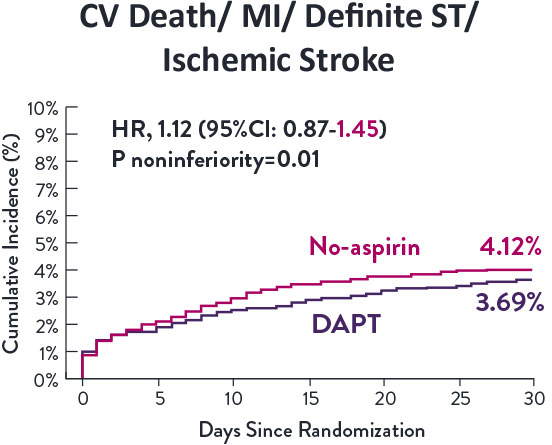
STOPDAPT-3 Trial 11 was designed to explore 0-month DAPT* (SAPT˄ using only P2Y12 inhibitor) for ACS and HBR patients.
Though the results are comparable for both bleeding and ischemic events for DAPT and SAPT arms, the study did not meet its endpoint and concluded to use DAPT for 1 month after PCI.

XIENCE™ Stent remains the ONLY DES with the shortest DAPT indication, as short as 28 days.12



MAT-XXXXXXX